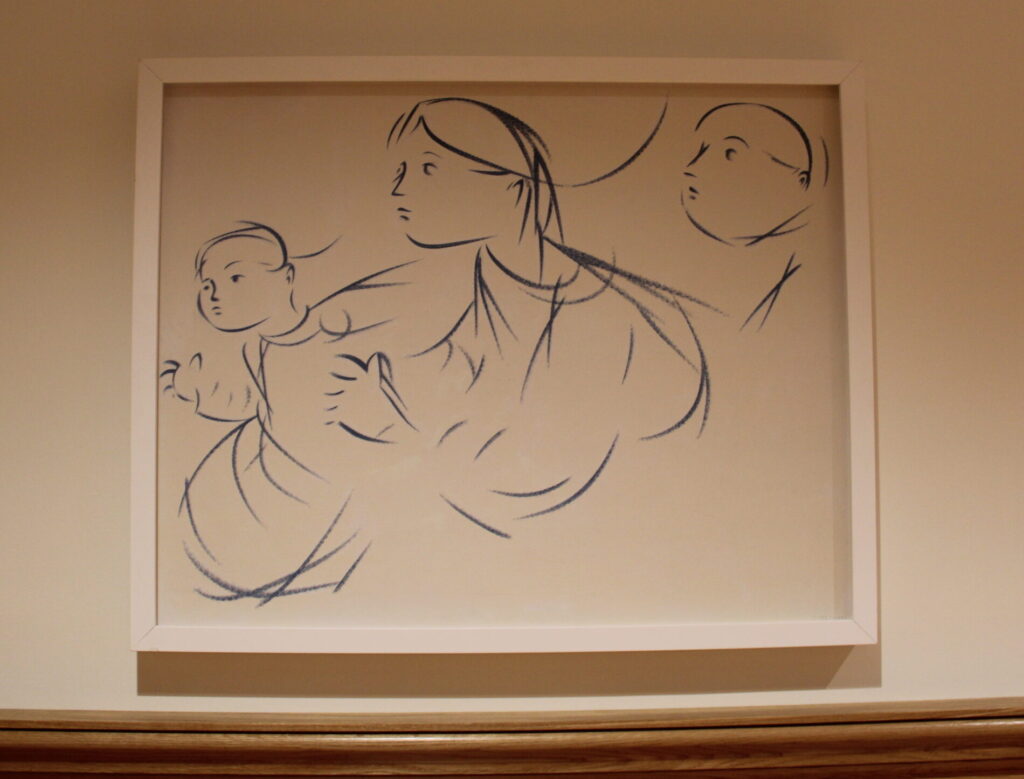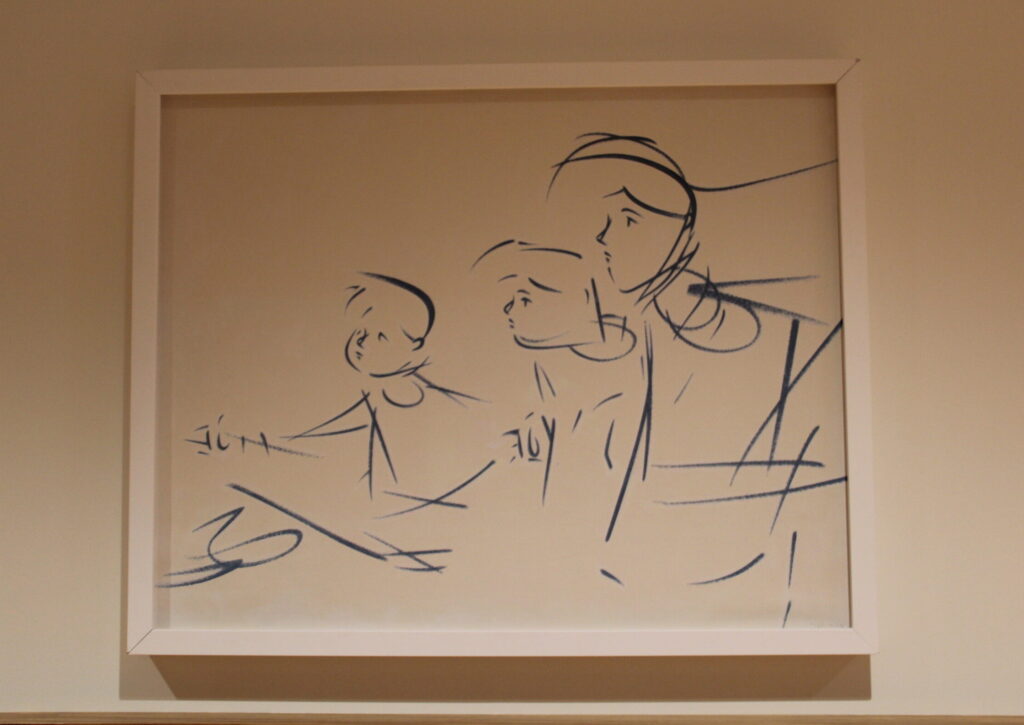




Leo Marchutz
born Germany 1903, died France 1976
Blue and White Stories from the Bible
circa 1969
ink on paper
Leo Marchutz was born in Nuremberg, Germany, in 1903. He grew up taking art classes but, at the age of thirteen, decided he preferred independent study to the rigidity of academic art classes and promptly began visiting art museums across Europe to study the works of Impressionist masters such as Cézanne and Van Gogh. In 1924, he completed his first lithograph portfolio and achieved some success by selling to notable collectors, including Max Reinhardt. He moved to Aix-en-Provence, France, for an artist residency program in 1928 and stayed there permanently in 1931, living in Chateau Noir, a farm outside of town. He worked as a chicken farmer on the Chateau to earn his living before he was placed in an internment camp in 1939 for being a German citizen. He was released in 1940 under the promise of serving as a prestataire for the French army. He was promptly drafted in May 1940 and demobilized in October. He returned to Chateau Noir to escape deportation, where he could focus only on drawings on poor-quality paper due to a lack of funds during the war.
After the Liberation of Provence, Marchutz returned to painting and lithography, focusing mainly on biblical subjects. After mastering his lithographic technique in 1949, he published several series of lithographs and eventually became the exhibition commissioner for Aix. In 1959, he was hired as a professor at the American University in Aix, where he taught painting and drawing until 1972, when he and two of his apprentices founded The Leo Marchutz School of Painting and Drawing.
His blue-and-white drawings on view at Calvary Episcopal Church are in his typical style — simple yet full of movement through quick, sketchy lines. They relate directly to an exhibition of Marchutz’s work at the Memphis Brooks Museum of Art in 1969.