


Dorothy Sturm
born 1910, Memphis, died 1988, Memphis
1968-69
leaded stained glass
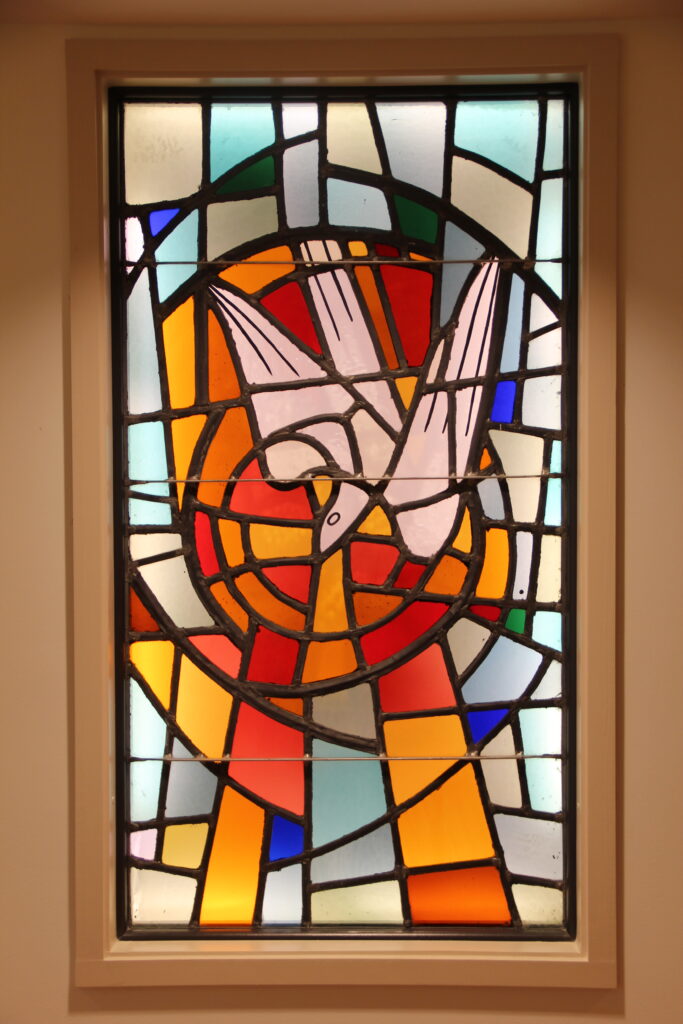
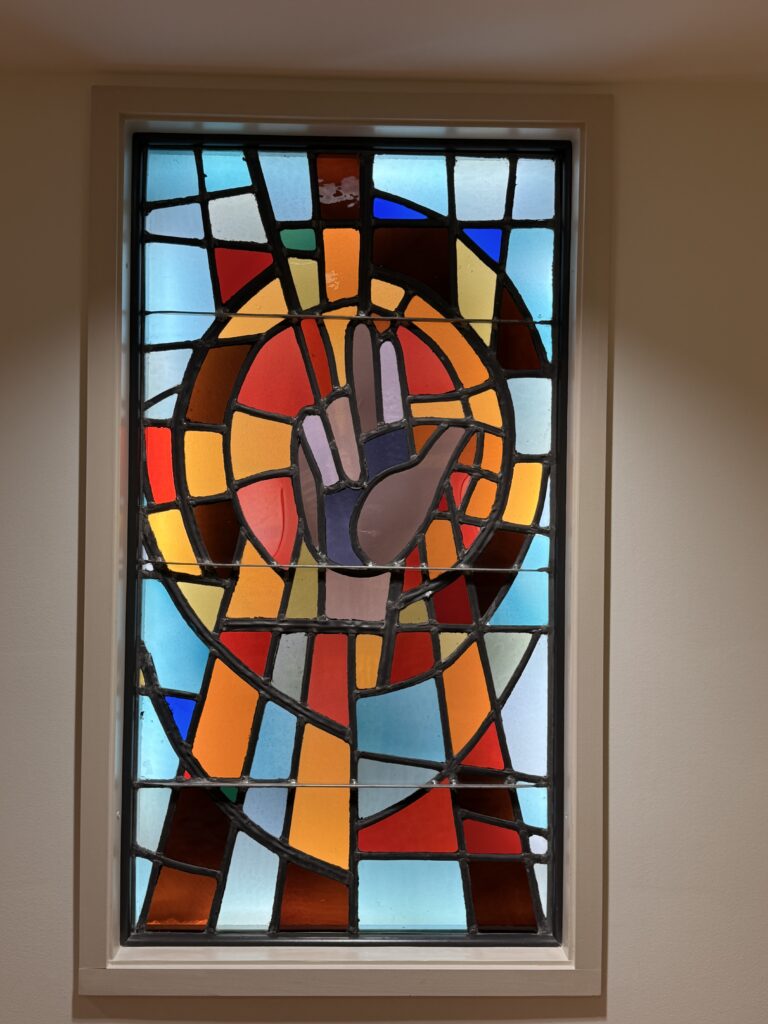
Trinity Windows
c. 1970
leaded stained glass
Dorothy Sturm was born in Memphis in 1910, where she attended Snowden Elementary and St. Mary’s Episcopal School before moving to New York in 1929. It was in New York where Sturm began to hit her stride as an artist, studying at the Grand Central School of Art and the Art Students League of New York. She also studied biology at Columbia University, hoping to pursue a career in medical illustration. While she was in college, she also studied the works of prominent artists, including the English painter and poet William Blake, which greatly influenced her own watercolor techniques.
Sturm returned to Memphis in 1934 to join the Memphis College of Art as a founding faculty member. She continued to work there for 40 years, retiring as Professor Emeritus.
Not merely an instructor, in her own studio practice, Sturm experimented with multiple media, including collage, enamel, copper, and painting. As a practicing artist, Sturm showed for many years at the important Betty Parsons Gallery in New York. Her work can be found locally in the public collections of the Memphis Brooks Museum of Art, the Tennessee State Museum, and the Metal Museum Memphis.
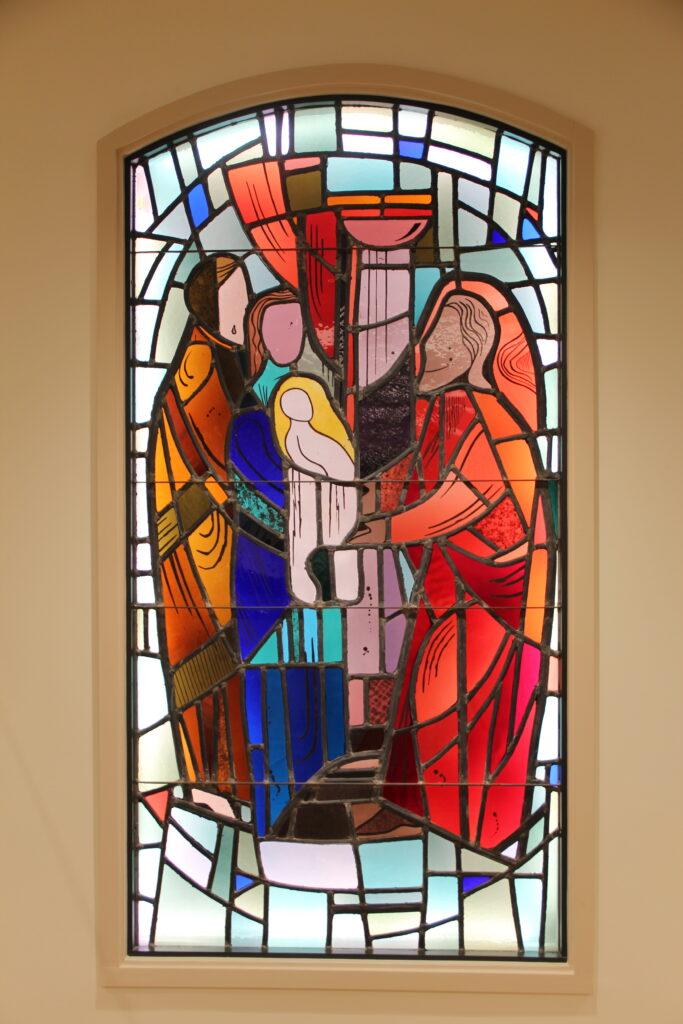
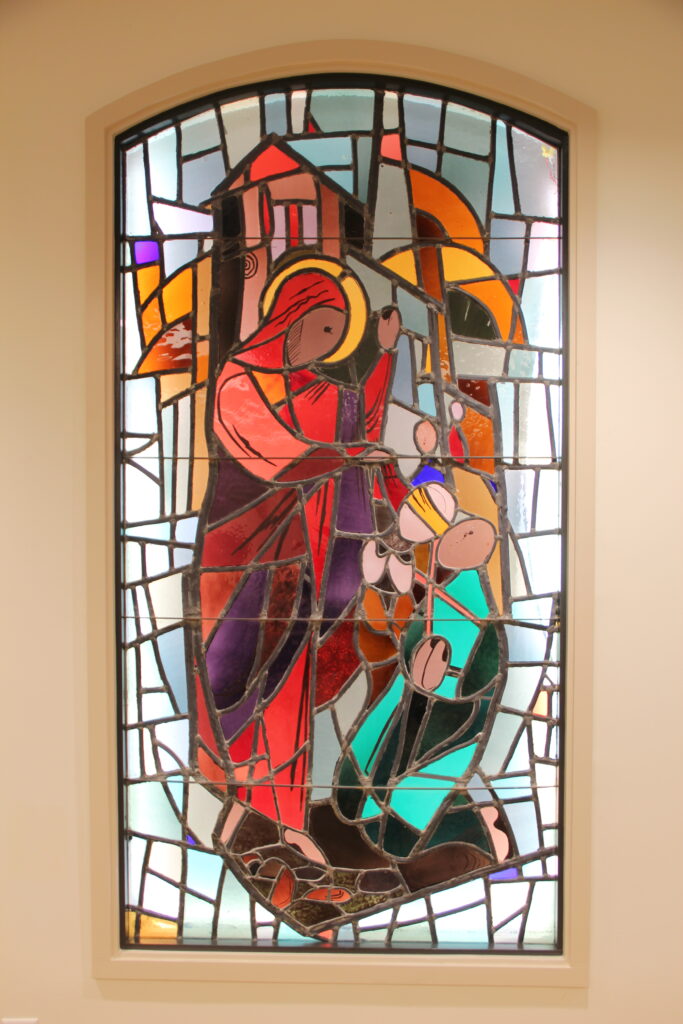
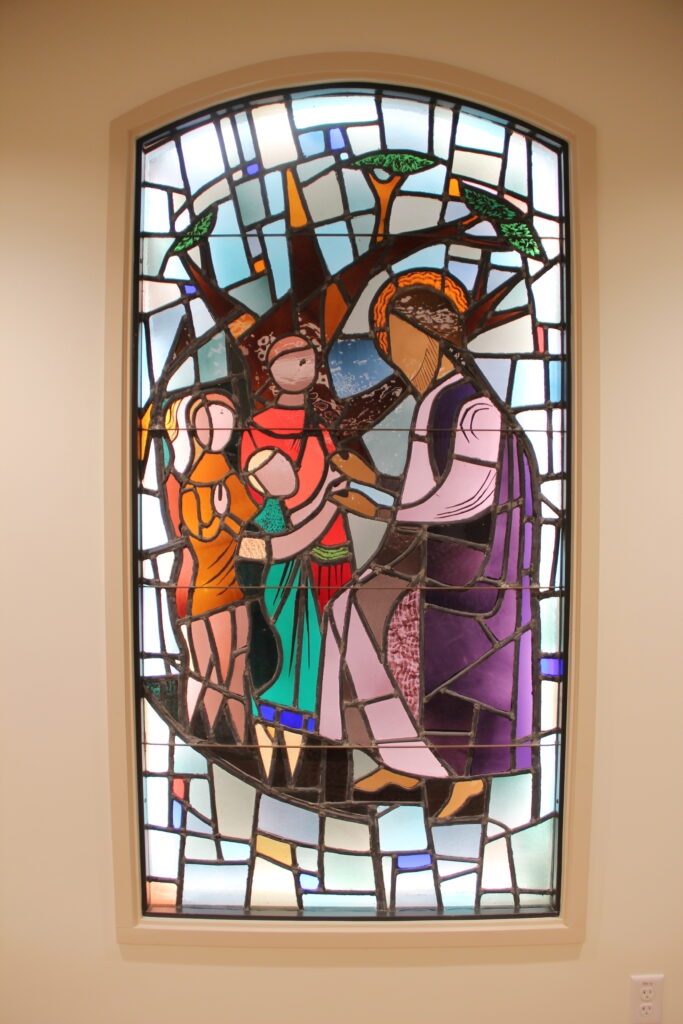
Both of Calvary’s window sets were commissions for Sturm. Note that when the Calvary windows were done, Memphis and the entire United States was amid social upheaval and reorganization. It’s probably not coincidental that the Chapel windows, begun the year Martin Luther King was assassinated in Memphis, depict a Jesus with dark skin tones.
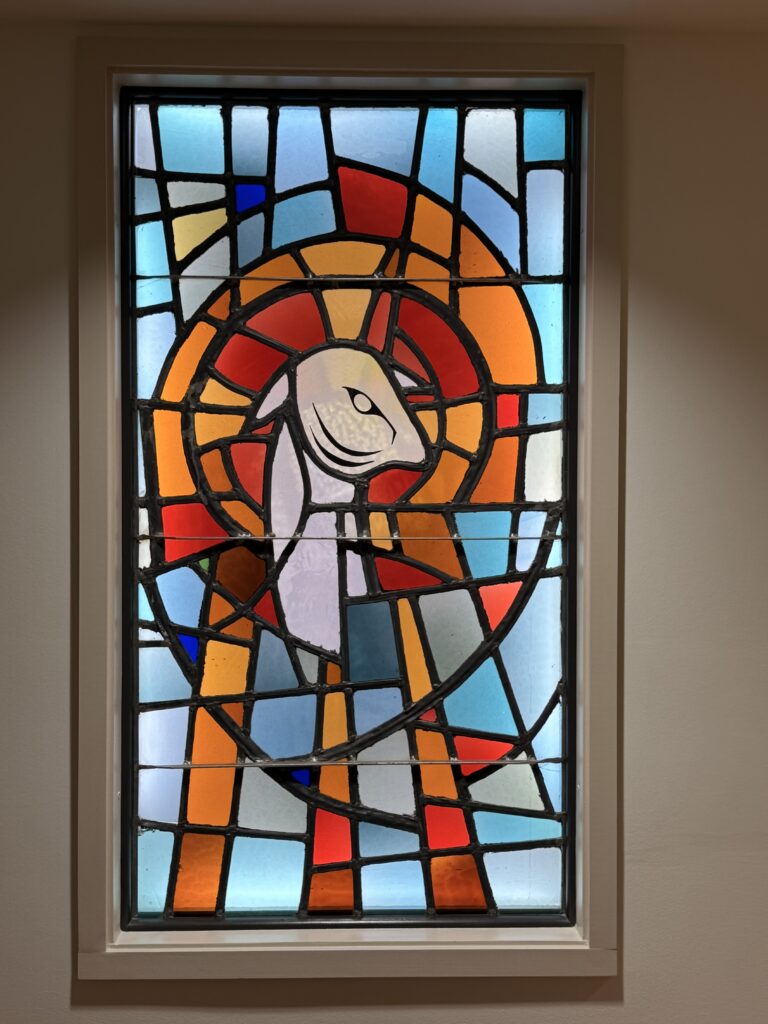
The Trinity windows (Hand, Lamb, Dove) symbolically depict that one God exists eternally as three distinct, coequal persons: the Father, the Son, and the Holy Spirit. This means that there is one God in three divine persons, not three separate gods.